
What Glass Takes From a Square Mini Print
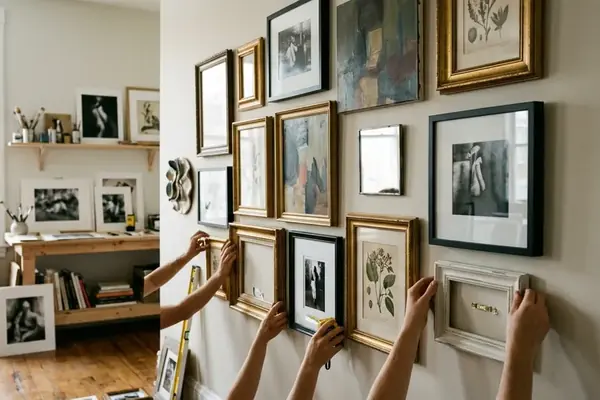
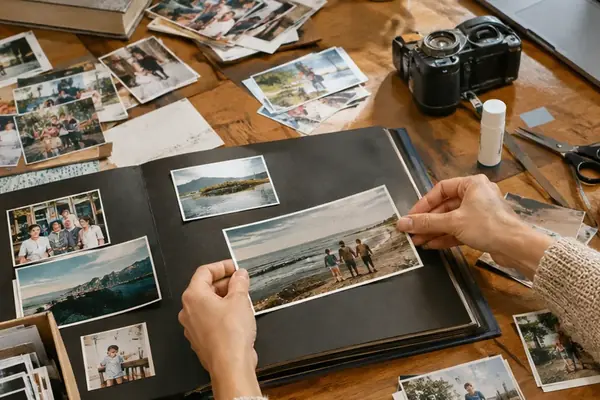
A stack of freshly printed square photographs looks like a project waiting to happen. The usual reflex is to buy a frame for each one, and that reflex costs more than money. Every sheet of glazing adds another reflective surface between the viewer and the image. It also puts the paper out of reach, and it spends part of the display budget on individual enclosures rather than on the photographs themselves.
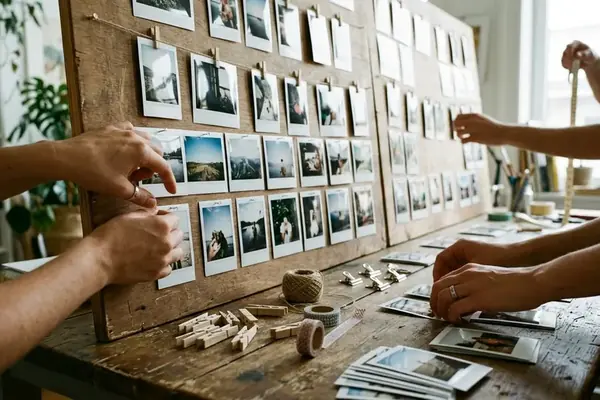
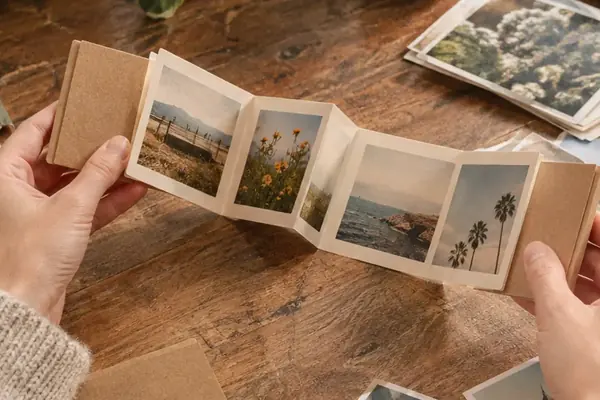
The decision becomes simpler once the purpose of the display is clear. If the prints are reproducible retro reprints made from a digital archive, people should be able to touch them, share them and rearrange them. Open wooden blocks, weighted wire clips and shallow ledges serve that purpose well. Full protective glazing then has a narrower role. It belongs to irreplaceable one-off instant film and to rooms where steam or cooking grease will reach the print.
Comparing the two approaches attribute by attribute shows where each one fits:
- Reflections: open holders add no glazing reflections. Glazed frames add them.
- Handling: open holders permit direct handling. Frames restrict it.
- Swapping: an open holder lets a print change in seconds. A frame has to be opened at the backing.
- Dust: open holders leave the print exposed. Frames reduce direct deposition.
- Cost: open holders cost the price of the holder. Frames cost the frame plus its fittings.
Cost needs a fair comparison. Open holders are not automatically the cheaper option. A well-made hardwood block can cost more than a basic ready-made frame, so the comparison should set the delivered price of one holder against one correctly sized frame, including any mount, backing and shipping.
Reflections, Matte Cardstock, and the Shadow of a Real Edge
Why does a print that looked rich on the screen turn flat once it hangs opposite a window? Ordinary picture glass and acrylic reflect light at their surfaces. When a bright window lands on a dark area of the image, the soft shadow detail that defines a retro look becomes harder to see. Muted tones and faded blacks are the first to disappear under that reflection. Anti-reflective glazing behaves differently from ordinary glazing, but it remains a barrier between the eye and the paper.
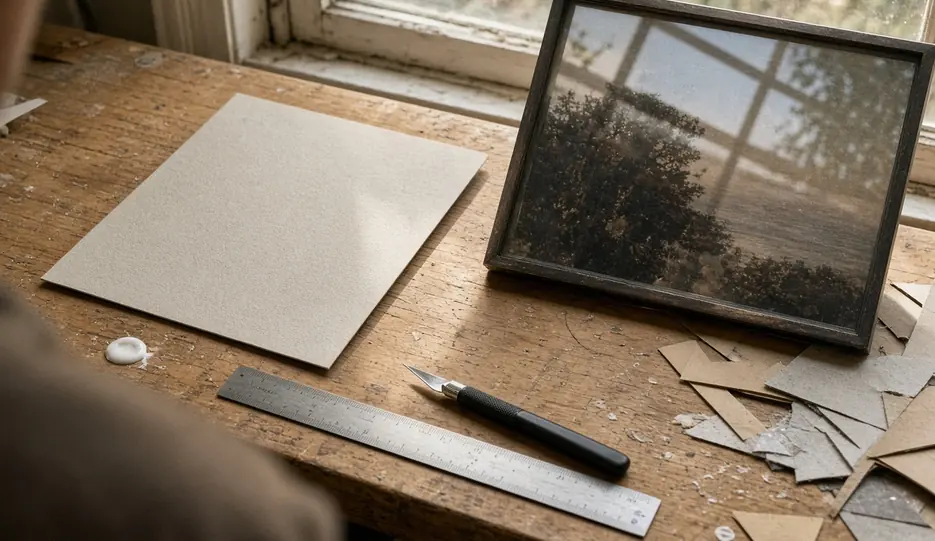
An open holder removes one layer of the problem. It eliminates reflections from an extra glazing sheet, while the print's own surface still reflects light. Satin and glossy papers can show highlights. Matte stock is the most forgiving choice for a room with large windows.
Placement is therefore a matter of testing. Stand a sample print at its intended height and view it from the usual seated position, then from a standing one. Repeat the check in daylight and again with the lamps switched on. Adjust the holder angle until neither the window nor a bulb dominates the image.
The second consideration is physical. Thick borders and matte or satin finishes invite people to pick the card up and pass it around a table at a gathering, which a sealed backing board rules out entirely. A broad white border gives guests somewhere to hold the print without their fingers crossing the image. Clean, dry hands and a grip on the edges are enough etiquette for most visitors.
There is also the shadow. A card tilted slightly in a slotted block casts a real edge shadow onto the desk, shelf or mantelpiece beneath it. Side lighting makes that shadow more visible and shows the thickness of the cardstock, which gives a small print a sculptural presence that flat glazing cannot reproduce.
Dust, Bent Corners, and the True Cost of a Reorder
The case for open display depends on one number that people rarely calculate: the cost of replacing the card. That cost is the print price, plus its share of the delivery charges, plus any minimum-order requirement imposed by the print shop. A print that is cheap inside a batch of something like thirty can become an expensive replacement when someone orders it alone. Set that figure beside the full cost of the holder or the complete frame and mount before deciding that a card is expendable.
Reprinting is only possible if the reprint matches the original. Keep the source image, the crop, the border layout and the exported file together in one folder. Replacing a damaged card does nothing for an accidentally deleted source file, so the backup of the archive deserves as much attention as the display.
Exposed prints wear in predictable ways. Dust settles on them. Curious guests bend the corners. Airflow from vents and doors moves light cards out of position. Each of these problems needs its own response, and maintenance should rest on regular inspection, because repeated rubbing of the image surface does more harm than the dust.
- During the first month of a new display, inspect the prints every 7–14 days, give or take. This is a housekeeping rhythm for spotting problems early. It does not mark a fading threshold.
- Clear loose dust with a clean, hand-operated photographic air blower, and keep the nozzle away from the print. Do not drag grit across the image or use household cleaning sprays.
- When swapping a print, check the corners, the contact point inside the holder and any clip marks. A bend from handling and a dent from pressure have different causes, and each needs a different fix.
- Keep open stands out of direct afternoon sun. Both visible light and ultraviolet radiation contribute to fading.
Price the Reorder First
Before treating a card as disposable, open the print shop's cart and price a single reprint with shipping. If that total approaches the cost of a frame, the print deserves more protection than an open clip.
For broader care principles, the Library of Congress guidelines on caring for family photographs give a useful baseline on light, handling and storage.
Fitting Oak Blocks, Brass Clips, and Ledges to Desks and Tables
Beginners usually buy one style of holder and use it everywhere. A better approach starts from the way people will interact with each display and chooses the hardware to match.
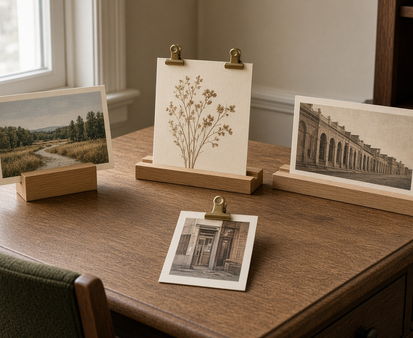
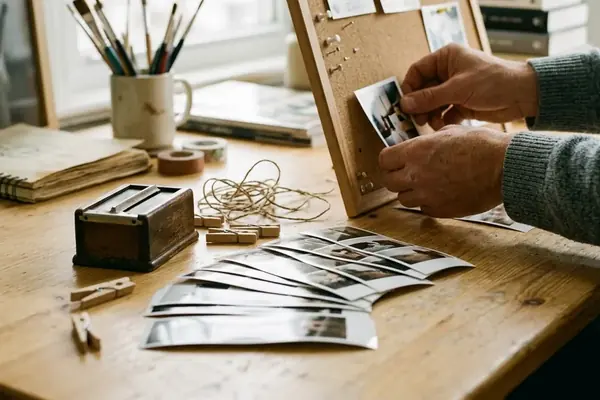
A kerf-cut hardwood block in walnut or raw oak suits a single print on a desk that will change every few weeks. A weighted brass wire clip raises the image to a more visible height, which helps on a crowded dresser. A narrow picture ledge carries overlapping horizontal rows, the closest wall equivalent to a scrapbooking spread.
Each room adds a small adjustment:
- Home-office desk or bedroom dresser: keep the block clear of the spot where a mug usually sits.
- Living-room sideboard: leave enough finger room around the block to lift each print by its border.
- Event welcome table: for wedding inspiration displays, load the weighted clip with the actual print and give the tabletop a gentle bump. A tall wire stem increases leverage on the base, so shorter stems are safer near guests.
- Ledges: overlap blank borders rather than faces or captions, and confirm that the retaining lip supports every card.
Fit becomes more important as the setup grows. Measure the actual thickness of the cardstock before choosing a slot, because no single slot width suits every paper. The card should slide in without force and stand without an excessive lean, and the slot's depth and angle affect stability as much as its width. Contact surfaces should be smooth and fully cured, since a rough kerf edge abrades paper. An unfinished wooden block should also not be described as an archival enclosure.
Test Clips on Offcuts
Clip a sacrificial strip of border from the same print stock, leave it for a while, then remove it and examine it under side light. A visible crease or indentation means the clip will mark finished prints, so that clip should be replaced.
Kitchens, Bathrooms, Hallways, and the Instant Film You Cannot Reprint
The case for open holders depends on conditions: replaceable prints, dry air and little contact. Steam and grease remove the first two conditions, and a narrow passage removes the third. Cooking aerosols in kitchens, condensation in bathrooms and bags brushing hallway walls will damage an exposed card quickly.
For those rooms there are two sound choices. The first is to move the display. The second is to use a properly fitted protective frame. A backed frame reduces direct contact with dust, splashes and cooking deposits. Ordinary framing is not hermetically sealed and does not regulate humidity, so a bathroom wall stays a poor home even for framed work.
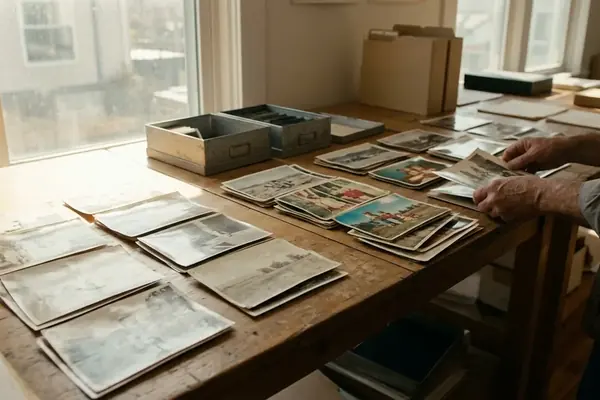
The harder boundary concerns the object itself. A scan of an original instant photograph preserves a reproduction of the image. It cannot replace the chemical original, the handwriting on its border or a signature. Those pieces belong in conservation-minded framing or protected storage. Protective framing should keep the image surface away from the glazing with a window mount or spacers, and it should use photo-safe mounting and backing materials. UV-filtering glazing still leaves direct sun harmful.
Display the Copy Instead
When a precious instant photo belongs in a sunny or busy spot, print a reproduction for that location and keep the original somewhere stable and protected.
The prints waiting on your table right now fall on one side of this line or the other. Are you preserving an irreplaceable artifact for the decades, or staging a living memory you want to pick up and swap next month?